





Description
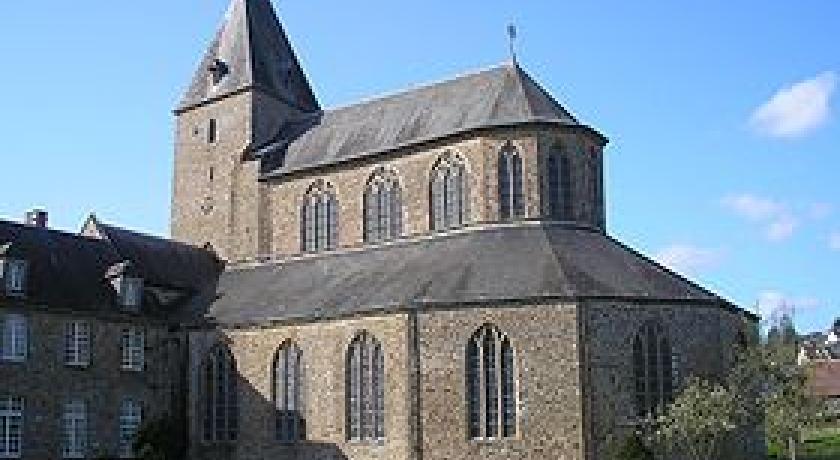
The old abbey of Walk-the-Ladies (or abbey our lady of abondance) is in the area of Walk-the-Ladies, in Belgium, in the Province of Namur. Founded in 1103, the community of moniales adopted the Cistercian order one century later. The abbey was officially removed in 1796. Its buildings were then used by various works or associations of the Church. Since September 2014, the old abbey gathers priests of the Fraternity of the Holy Apostles and future priests in training.
Origin
- A serious but non authentified chronicle claims the origin of the abbey to a group of ladies, wives of knights who went on a crusade following Godefroid de Bouillon (1095). Based on the declaration of the count de Namur, these ladies gathered in a simple chapel of Meuse walk which they quickly converted into a more adequate church. During two years they prayed there for the victorious return of their husbands. At the end of the crusade (1099) those whose husband did not return installed their residence there – and it became “Walk-the-Ladies” - and there was found the first monastic community. The foundation is richly equipped by the knights of Godefroid, thus thanking the Virgin Mary for their victorious return back home.
- The church of the monastery was consecrated in 1103, date which marks the official foundation of the abbey. Since, the foundation work was on, a statue of the Virgin Mary was discovered dated from the 13th century in a water container, the monastery is devoted to Our Lady of the Pond. At the removal of the monastery, in 1796, this statue is preserved at Namur until 1880, year when it returned to the monastery.
Geography
The abbey of Walk-the-Ladies can be located on Walk-the-Ladies town in Namur, in Belgium, about 10 km from the administrative center of the Province of Namur, on the left bank of a brook which is thrown directly into the river. From a distance, Walk-the-Ladies is located at 7 km east of Namur.
History
12th and 13th centuries
- Few things were known concerning the development of the primitive community. The first documents that was available dates from the 13th century. The passage of Saint Bernard in the area in 1146 (at the time of the preaching of the second crusade) undoubtedly encouraged the moniales to adopt the Cistercian rule. In 1236, in any case, the monastery is part of the Cistercian order, and the first Cistercian abbess is called Ivette.
Cistercian abbey
Personalities - some names only – that emerged during the obscur times in history:
- An abbess Mary in 1273.
- 1291: abbess of Helwy.
- 1330: abbess Clarisse de Bawegny.
- 1340: abbess Mary of Malaise.
- 1392: abbess Ponche de Modave.
- 1402: abbess Marguerite de Boen
Reform of the 15th century
After a period of decline (following the examples of other monastic movements) and of great instability, the abbey returns with a more strict religious discipline thanks to abbess Mary de Bervier (+1447) and to her group. Walk-the-ladies acquired a reputation of enthusiasm and reform. The abbey spreads and supports revival, amongst others, in Soleilmont close to Fleurus.
- Mary II of Turnai, died in 1460.
- Mary III of Herstal (1460-1486) modernizes the abbey by installing there a system of circulation of water. In 1480 she also obtains the solemn protection of the Maximilien archduke of Austria and Mary of Burgundy (Act of August 14th, 1480).
- Mary IV of Hustin (1486-1504) directs the abbey during a period of conflicts between the dukes of Burgundy and the principality of Liege. The abbey did not escape the consequences from the war.
16th and 17th centuries
- Catherine of Hodeige (1504-1531)
- Jacqueline of Houtain (1531-1565) whose tomb stone is preserved.
- Mary V of Dave (1565-1579)
- Jeanne Baduelle (1579-1602) has influence in the court of Spain and obtains from Philippe II an important exemption of taxes which were to be paid on farms (Tillier, Namêche, Wartet) of which did not produce more incomes because it was ransacked by troops passing by. That perhaps saved the abbey of insolvency. The splendid tomb stone of Jeanne Baduelle is preserved in the cloister of the abbey.
- Clémence de Castro (1602-1635), of Spanish origin, made great efforts towards the development of the valley. The new methods of forging mill to beat iron and water mills brought prosperity. On a stone basin (of 1620) close to the fish pond, an inscription pays him homage: “Clemence, mother and lady of this noble convent, brought new life to this money brook”.
- Anne of Jamblinne (1635-1658)
- Christine of Hinnisdael (1658-1682)
- Catherine Woot of Trixhe (1682-1706) directs the abbey during the difficult end of the century. The head office of Namur in 1692 was particularly devastating for all the area in the neighbourhood. Food became rare. Charles II of Spain answered liberally the petitions of the moniales whom were at the edge of food shortage.
18th century
- The long abbatial of Marguerite de Bulley (1706-1722) was a period of rebirth. The monastery was restored and embellished. The church was renovated and enriched by splendid ornaments, candle sticks and sacred vessels.
- Constancy of Bulley succeeds (by election) her sister (1722-1743).
- Louise de Fumal (1743-1769) continues the restoration, as the epitaph testifies on her tomb stone which is preserved and can be seen in the cloister. In 1750, new stalls were installed in the choir of the church.
- Lady Mary-Joseph de Boron is the last abbess of Walk-the-Ladies (1769-1809). Its weapons are still visible close to the main entry gate. The water basin which one sees in front of the entry of the buildings – the last beautification - bears her name and the date of 1772.
Suppression and expulsion
- A first storm was the cause of the suppression of the abbey under the Austrian regime, in 1783. Contemplative orders were being considered as useless by the people, the moniales left for exile in Westphalie, in Essen, where they found a convent. They returned however to Walk-the-Ladies after the Austrian period, but the attempt at restoration of the monastery was in vain.
- In 1796, following the decree of September 1st, they were expelled by the revolutionists and their goods are confiscated. The abbey was bought as a national property.
- Friends repurchased the abbey to allow the nuns to return there. The few surviving ones died one after the other. The last, being Sister Scholastic Baudhuin, died in 1856, at the age of 87 years.
Various successive occupants
The buildings passed into the hands of the diocese of Namur whom later took management of it successively: After the death of the last Cistercian moniale the sisters of Saint Vincent de Paul occupied for a few years, the buildings of the old abbey.
- In 1875, the Ursulines of Cologne succeeded them. They arrived from Germany driven out by Kulturkampf, and opened on the Walk-the-Ladies a boarding school for young girls. The German nuns returned to their country at the beginning of the First World War (1914).
- French Carmelite nuns (not-cloistered) replaced them in 1919, by opening an institution for orphan young girls victims of war. A vocational training started from 1924.The activities of teaching ceased in 1965, and the old abbey became a reception hall and recovery home for ladies. In 1969, the abbey and its site were classified.
- From 1972 to 1980, the IATA of Namur (Institute of arts, techniques and crafts) has its boarding school.
- In 1981, moniales of the monastic Family from Bethlehem, Assumption of the Virgin and saint Bruno settles there. They left the place to go to Opgrimbie in 2000.
- In 2000, the abbey became one of the ‘’Houses of our lady’’ being part of a laic apostolic movement founded in Canada that had an international character. The place became a counselling center and a reception hall. That didn’t last long, however. In 2008, the diocese of Namur was again in search of tenants who could give a new life to this old and beautiful abbey.
- In September 2014, the Fraternity of the Holy Apostles poses its bags there. Inspired by the father Michel-Marie Zanotti-Sorkine, priest in Marseilles, and founded by my Lord André-Joseph Léonard, archbishop of Malines-Brussels, it gathers priests and future priests in training.
Architectural heritage and cultural
The choir of the abbey dates back to the 12th century, the church increased at the 14th century. It was discovered here a roman virgin antique of the 13th century and a “virgin with the child” of the 17th century, as well as an interesting series of tomb stones of abbesses.
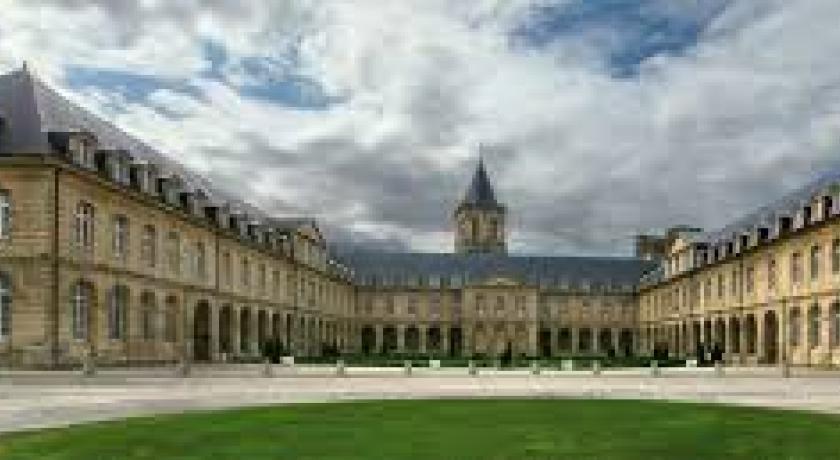
- During the installation of the Ursulines of Cologne, the buildings of the 18th century underwent some important restorations: it is a beautiful whole of modest mosane constructions of equal proportions and very harmonieux.
- A mirror of water flows round the monastic garden, maintained, in the middle of the 20th century, by “mitigated” Carmelite nuns. A farm located in the vicinity, still called “of the Ladies”, belonged to the abbey. This farm is of a rather curious architecture, with turret in pepper plantation and a chapel.
https://fr.wikipedia.org/wiki/Abbaye_de_Marche-les-Dames source
Address
Namur
Belgio
Lat: 50.488998413 - Lng: 4.956900120